The Chaos Papers are a curious phenomenon. Similarly to GEORGE, while they are proximally the product of people, their contents are not so much the creations of human intelligence, or ingenious discoveries made by investigating natural laws, as much as insanity siphoned from the darkness of the Void itself and filtered through the fragile, constrained minds of its "authors". New developments in scanning technology have allowed us to reproduce their mostly-unredacted contents here for reference with less than a █% chance of any remaining virulent infohazards contained within spreading and damaging internet infrastructure and/or the very fabric of consensus reality itself.
They are generally divided into three parts; the first is the "A4 section", named for the A4-sized (ISO 216) paper forming it. Despite being grouped into one section, its content (written using a variety of different ballpoint pens) is far from homogenous: signs of many different authors, and a wide variety of content, are present and obvious.
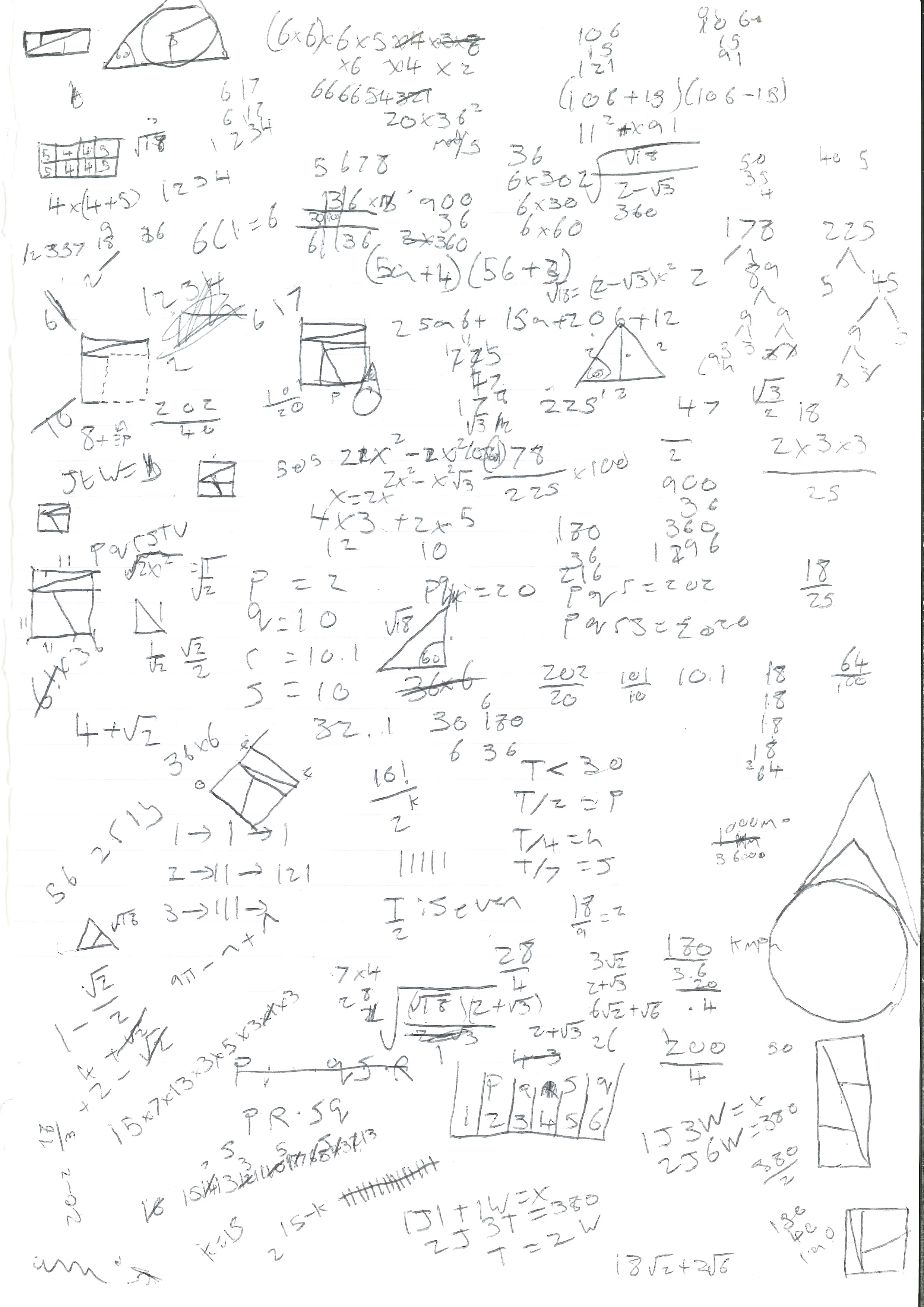
Sheet 0 is composed of densely packed geometric diagrams and arithmetic, which are, based on handwriting, only from one author (author A). We can clearly see a number of constructions using squares subdivided into triangles and trapezia, mostly with associated side lengths or numbers; oddly, some lack this, suggesting that they were either obsoleted by other diagrams or never intended to provide numerical results in the first place. As well as standard arithmetic operations like division, addition and multiplication being shown, the sheet contains stranger things like successive powers of 11 and sequences of 1 digits being shown together, prime factorization, nested square roots, and unexplained products or tables of variables. It seems most likely that this was used as scratch paper for competition mathematics problems, which tend to be heavy on geometry and somewhat unconventional but conceptually simple uses of arithmetic.
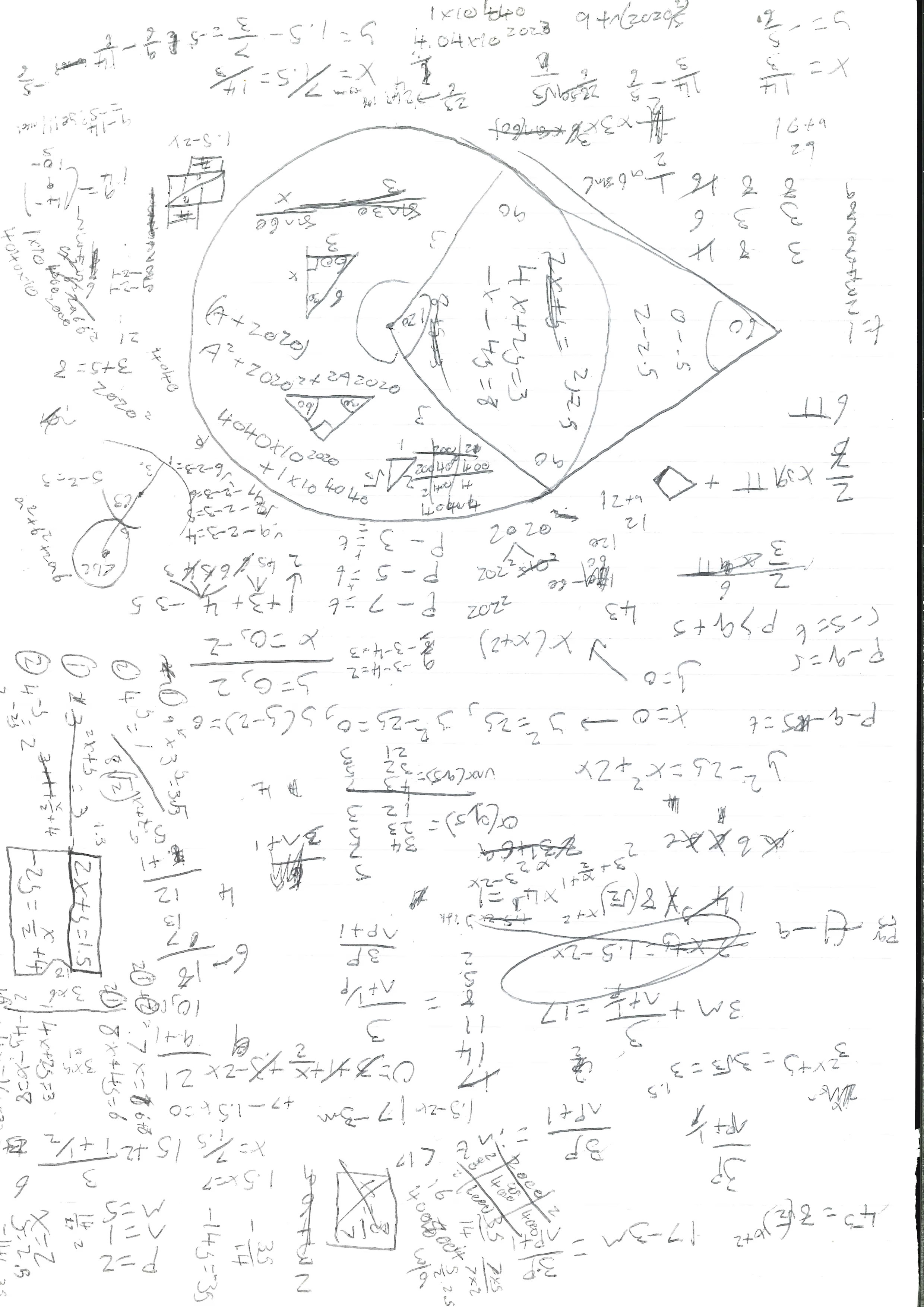
The reverse of sheet 0, sheet 1 is much like its reverse side except for a much lesser focus on geometry (only really some circles are left) and more use of algebra. This was probably similar to sheet 0 in construction and use.
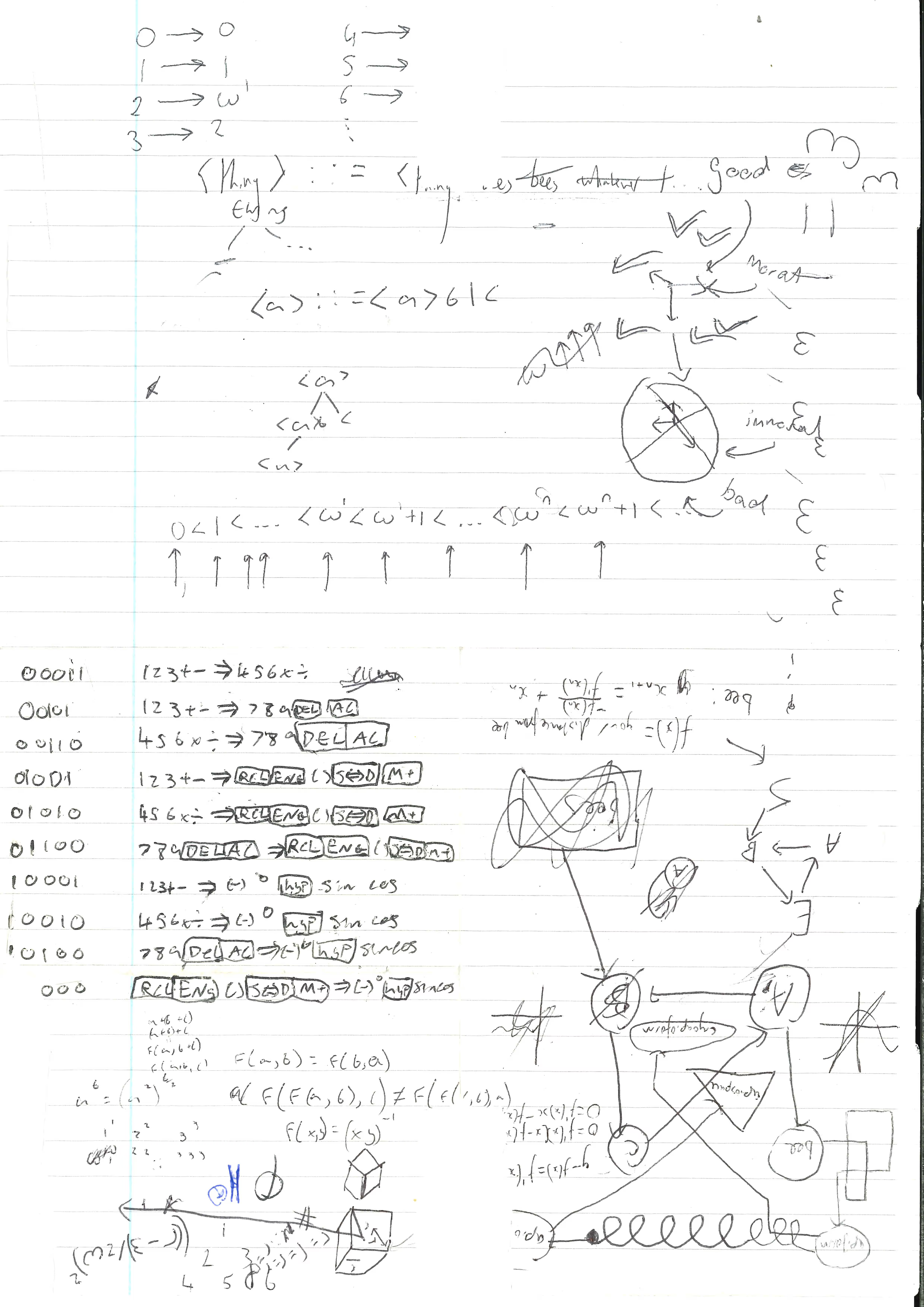
Sheet 2 is obviously very different to its predecessor. There is evidence of at least two other authors here, due to the differences in handwriting, as well as the possibility that the paper was used folded up due to its division into quarters in the bottom half. The paper has also suffered physical damage at some point: the top and bottom have pieces torn out, consistent with the folding theory, although the shape of the removed pieces is unusual. It's plausible that they were intended to redact a specific part for some unknown reason. The top half contains some preliminary work on ordinal theory by author B, as well as some descriptions of grammars by both B and C. The binary numbers and button symbols in the bottom-left match those of popular Casio handheld calculators, and seem to be an analysis of its keyboard scanning with the intent of allowing some buttons to be substituted for combinations of others, written by author A. Right of this is a statement of Newton's method for numerical root-finding, and as well as a graph-theoretic diagram including a spring/inductor for unknown reasons, part of another expression involving derivatives (possibly a derivation of Newton's method); these are all written by author C. Finally, near some miscellaneous shapes and unconnected numbers, author A defines a commutative, nonassociative function. This, then, has been used for general-purpose mathematics working by multiple people.
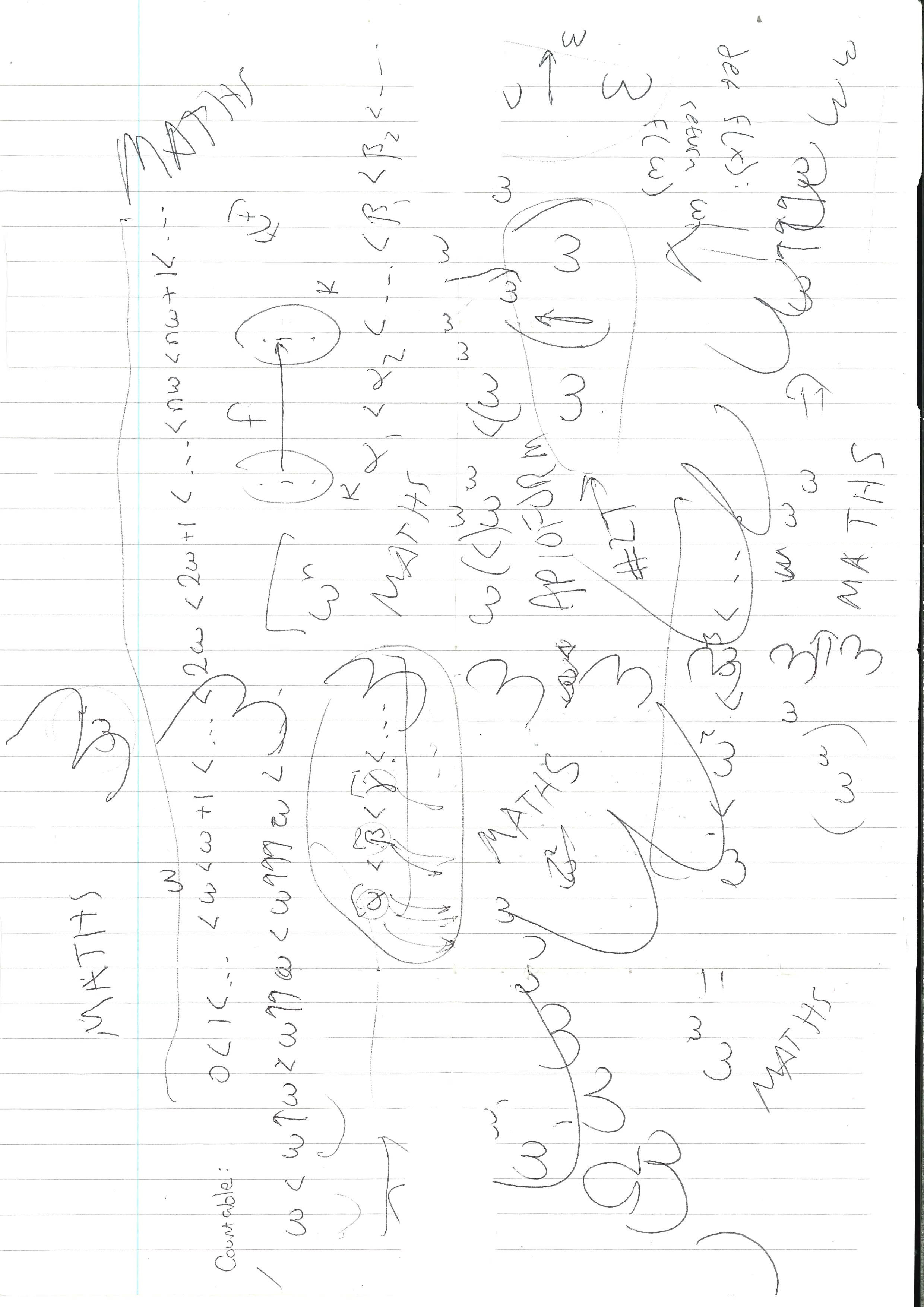
The reverse of sheet 2 is much more focused on extensions of the previous ordinal work, almost entirely by author B. Specifically, it is considering the ordinal hierarchy, and attempting to prove the equivalence of the cardinality of all infinite ordinals.
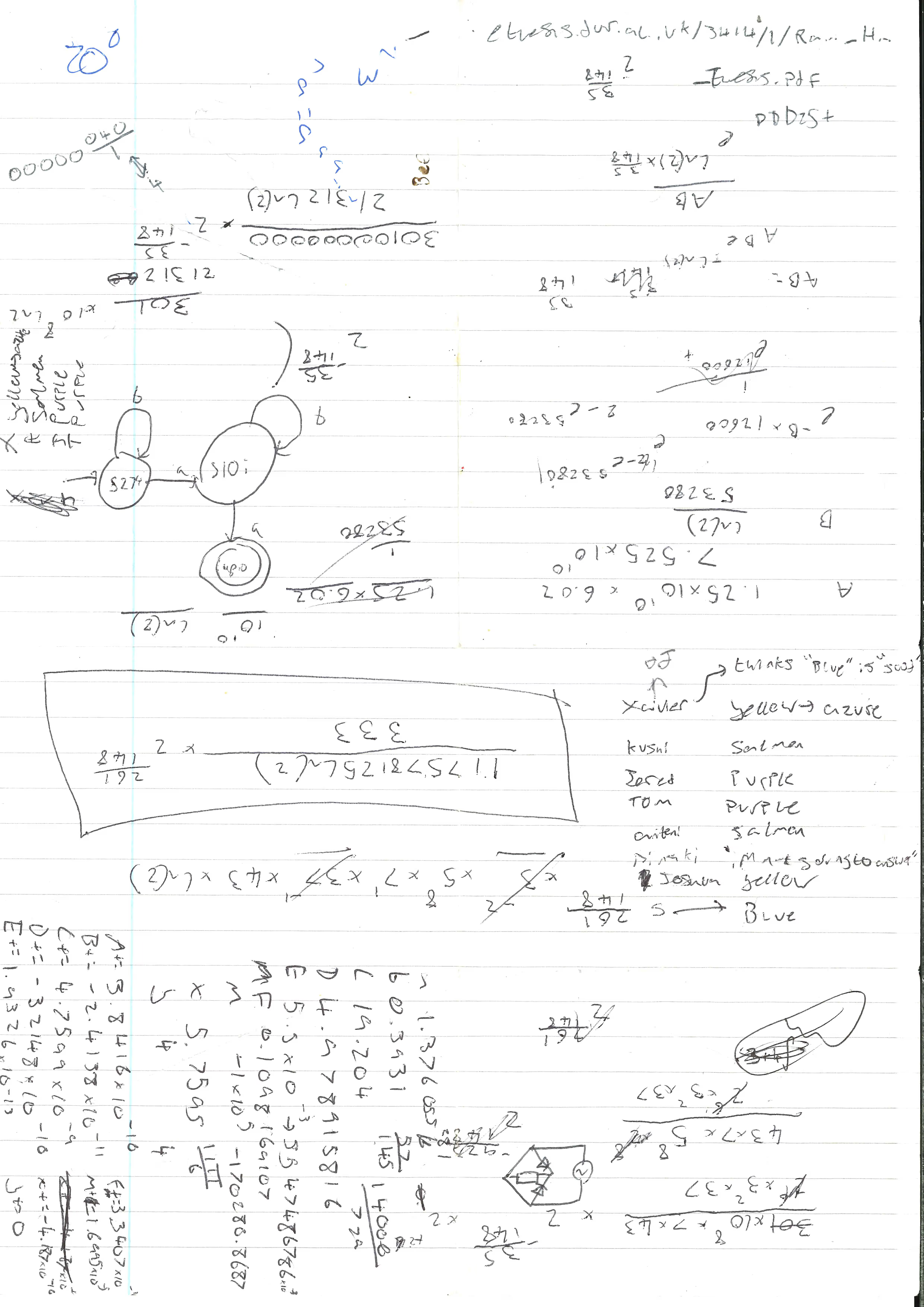
Sheet 4 has again been used in quarter segments, which is now especially obvious due to the visible-in-scanning creases. Its contents are now almost entirely by author A, except for ambiguous parts and an area clearly by C - a finite state machine recognizing an unknown language. Along with the arithmetic working typical of the Chaos Papers, a table in the middle-right maps a selection of names to colors - some have multiple colors delimited with an "→", so perhaps this is indicating change in color preference over time. This is clearly an attempt at analyzing the psyche of some test subjects. The top-right also contains a partial URL which, reassembled, points to a PhD thesis on "Spectroscopic and Microscopic Characterisation of Carbon Nanostructures". The motive for this is unknown at this time, although we speculate that this could be part of work by the Chaos Papers' authors to acquire a more durable carbon-nanotube-based writing surface - or, more worryingly, to build a space elevator, perhaps in order to access the Moon to transfer the Papers' content to it, a move which could have disastrous consequences for humanity.
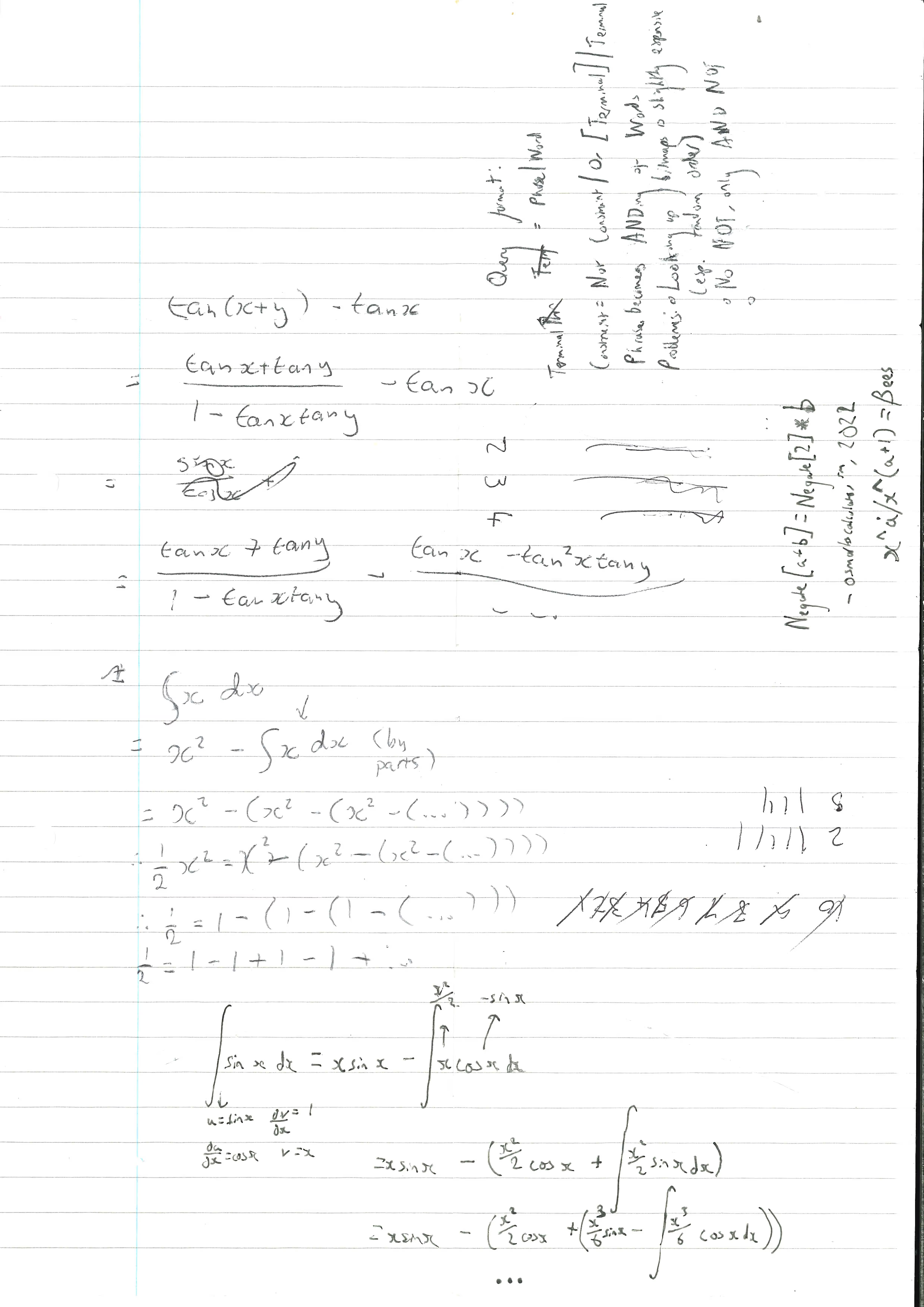
The content on the reverse is not at all related to Sheet 4's content. As well as Author B's algebraic manipulation of the "tan" compound angle formula, standard for a Chaos Paper, Author C seems to have been debugging a calculator program called "osmarkscalculator" (notably similar to the name of "osmarks"), although despite use of multiple search engines no evidence of this program has been found; they have also been designing a primitive language for writing search queries. The bottom half of the paper is more interesting, containing a potentially-novel proof of the infinite series "1+1-1+1-1+1..." equalling 1/2 through infinite integration by parts (by author B) and what appears to be a similar aborted attempt by author C to do the same with sine/cosine functions.
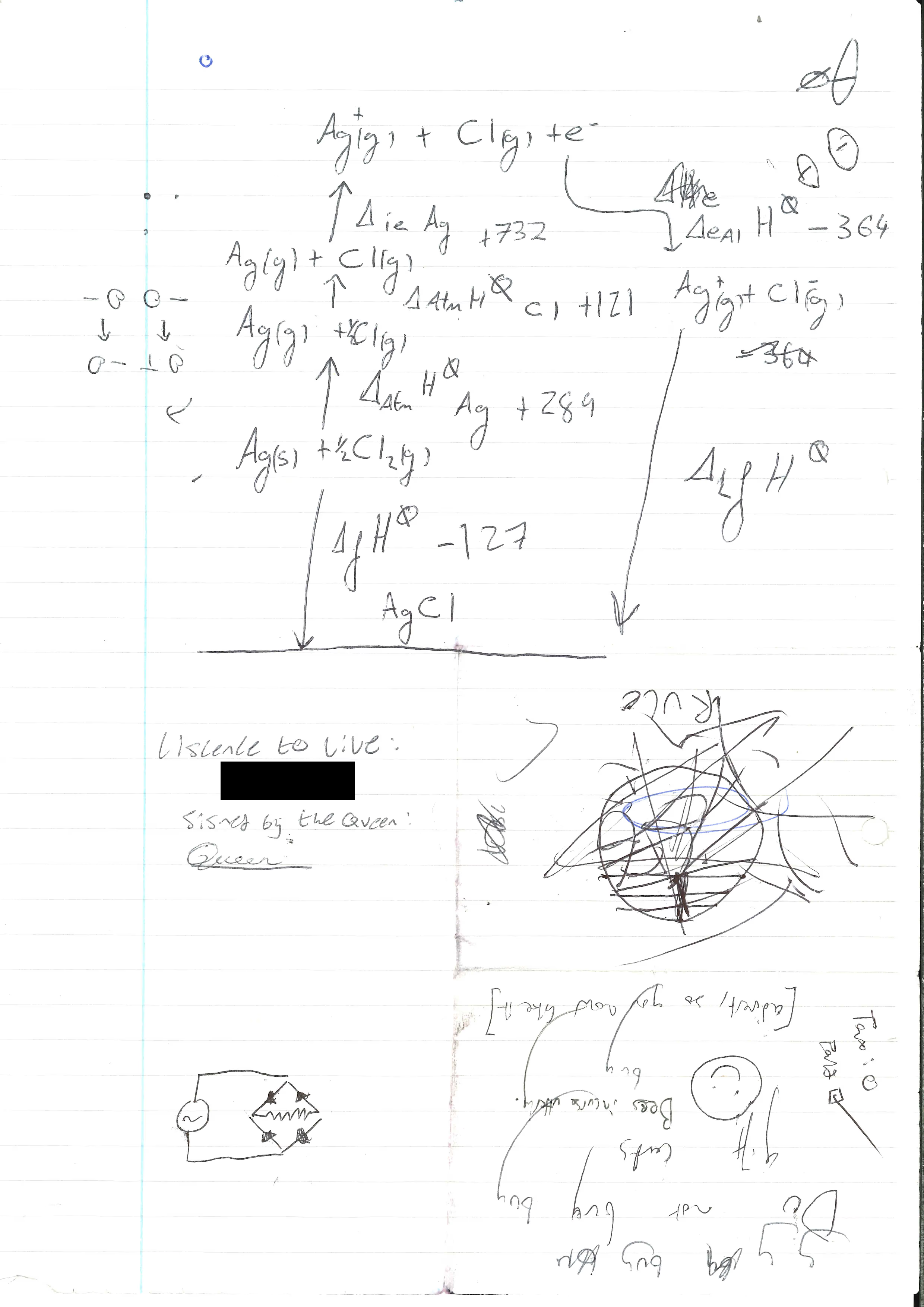
While more heavily creased, Sheet 6 doesn't seem to have been used as heavily as the previous sheets. The top part contains Author A's work on an electrochemical reaction involving silver and chlorine, as well as a signed "Licence to Live" from the Queen. It is unknown at this time which Queen this refers to, but in case this is the Queen of the United Kingdom of Great Britain and Northern Ireland, the implications for geopolitics would be substantial - subversion of national governments by the Chaos Papers' authors could result in a ΛK-class scenario by as early as 2033. A diagram of a full-bridge rectifier is found below this, implying highly advanced of electrical engineering, troublingly. Finally, Author C has used the bottom-right corner to write a short memetic agent apparently designed to induce disdain for gift cards. The exact cause of this is unknown, but we theorize that this might be related to an attempt to destabilize the economy to acquire greater control of industry.
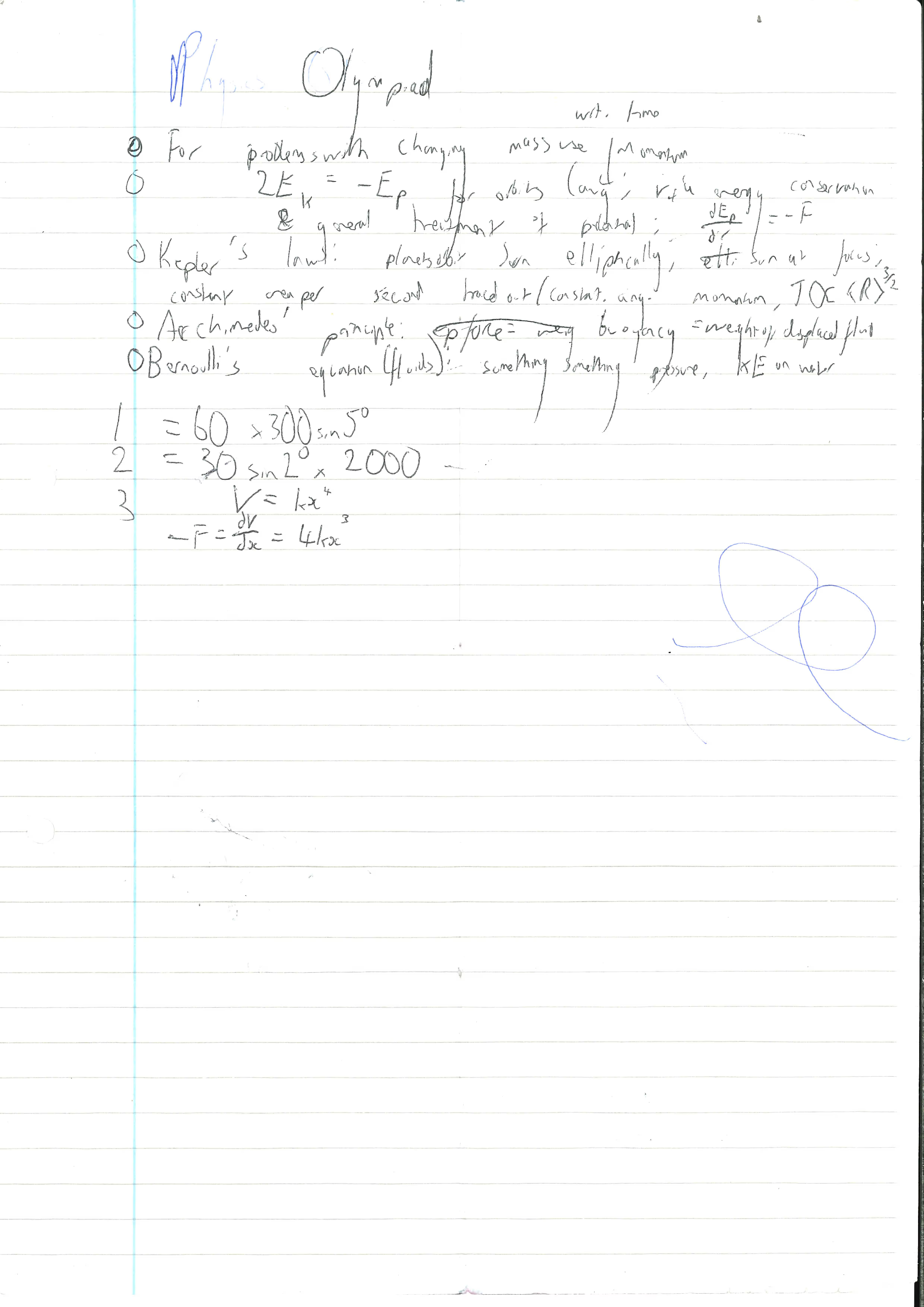
Sheet 7 breaks from the trend of previous papers, containing only the contributions of Author C, in a relatively regular format. The title is somewhat damaged because of what looks like an emptied pen, but "Physics Olympiad" is still readable with enough image enhancement. The content below corroborates this - it looks like notes on physics concepts relating to rocketry and fluids, as well as short pieces of working which may be related to this. We believe this supports our theory that the authors intend to conquer the Moon or other celestial bodies for their own purposes.
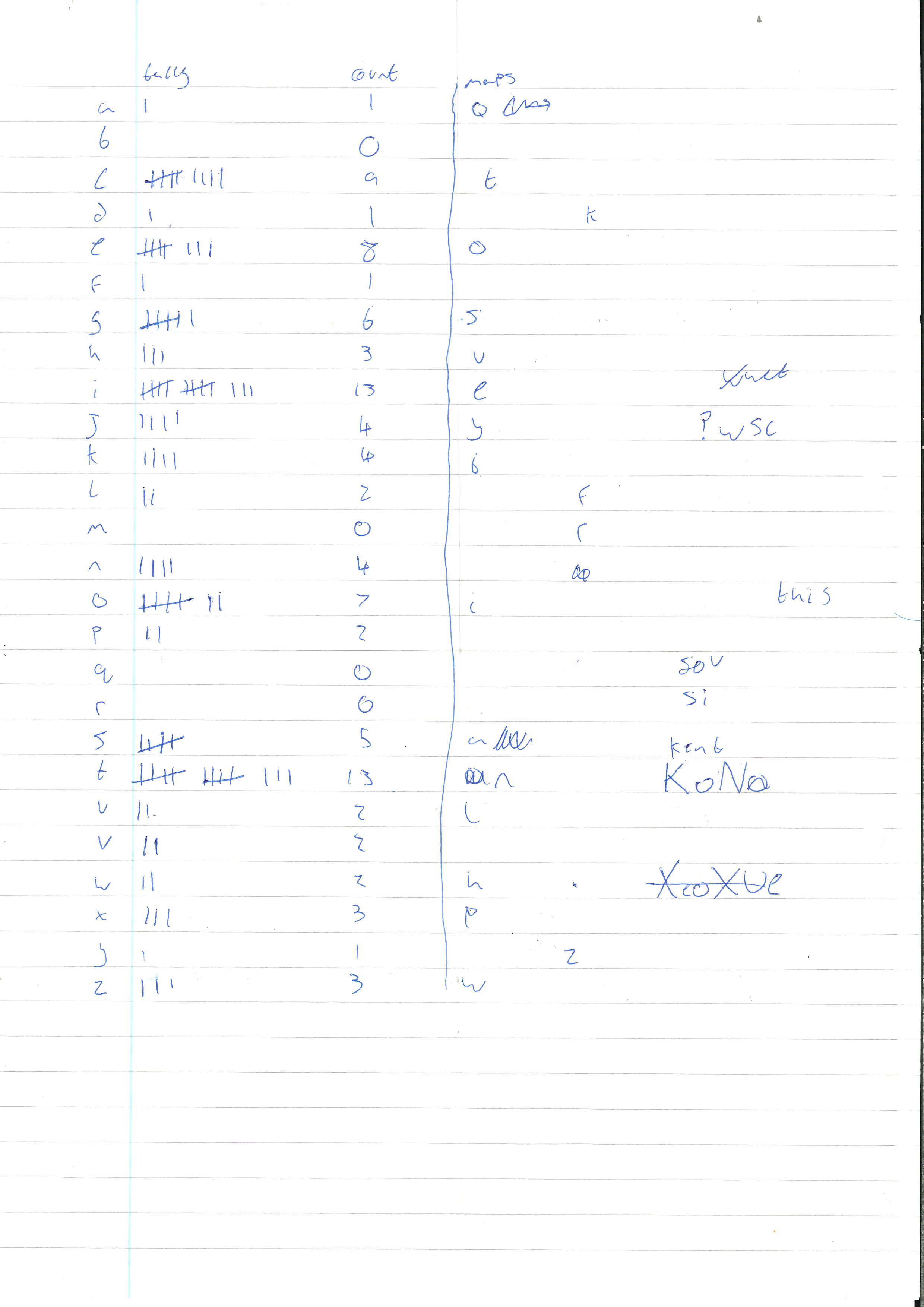
This sheet contains what appears to be a highly sophisticated, partially-completed attempt to decode a substitution cipher. We believe that given the obvious importance of the data being decoded, this attempt would only have been abandoned if an even better method was available - the codebreaking skill this suggests means that it may be necessary to advance plans to move to more advanced methods of secure communication, such as carrier pigeons, Facebook or the Vigenère cipher.
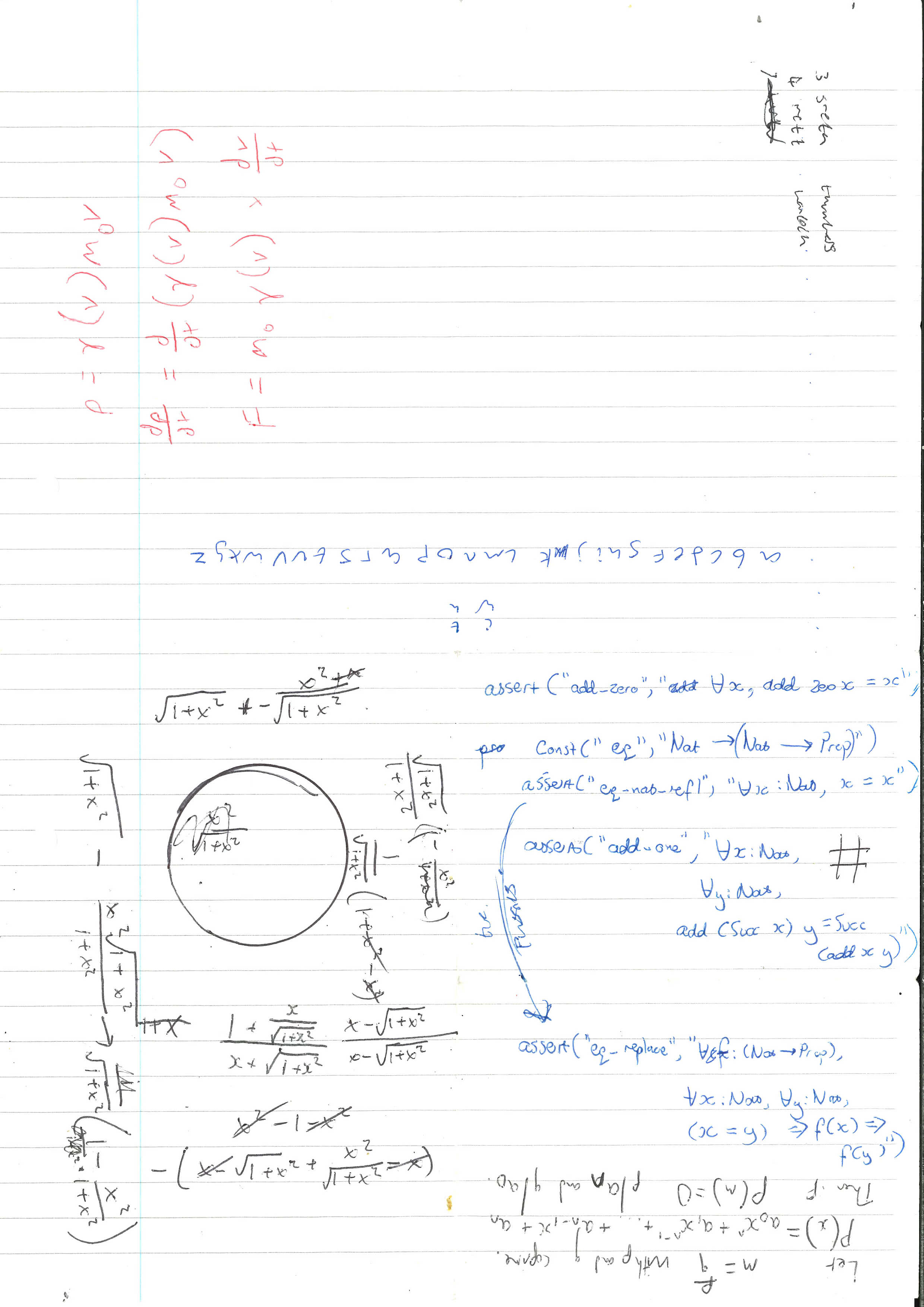
Sheet 9 is generally less dense than earlier examples, and only has a few pieces of content, both by authors B and C. Author B has authored what appears to be code in an as-yet unknown typed thorem-proving language, defining basic axioms of Peano arithmetic. Author C has (seemingly in multiple sessions, based on different inking) stated the rational root theorem, written down an (incorrect) relativistic form of "F=ma", and attempted to manipulate equations involving square roots for unknown purposes.
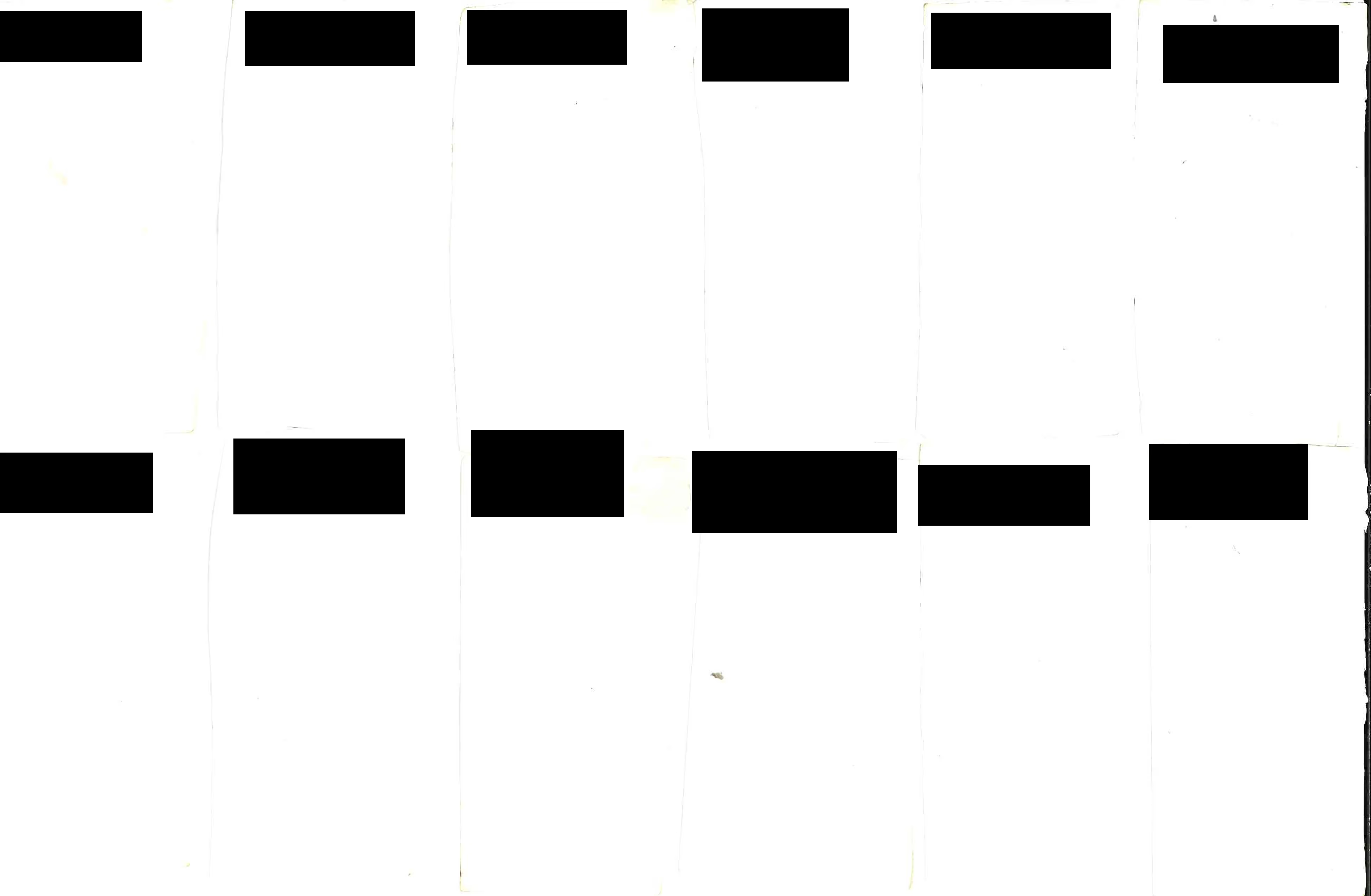
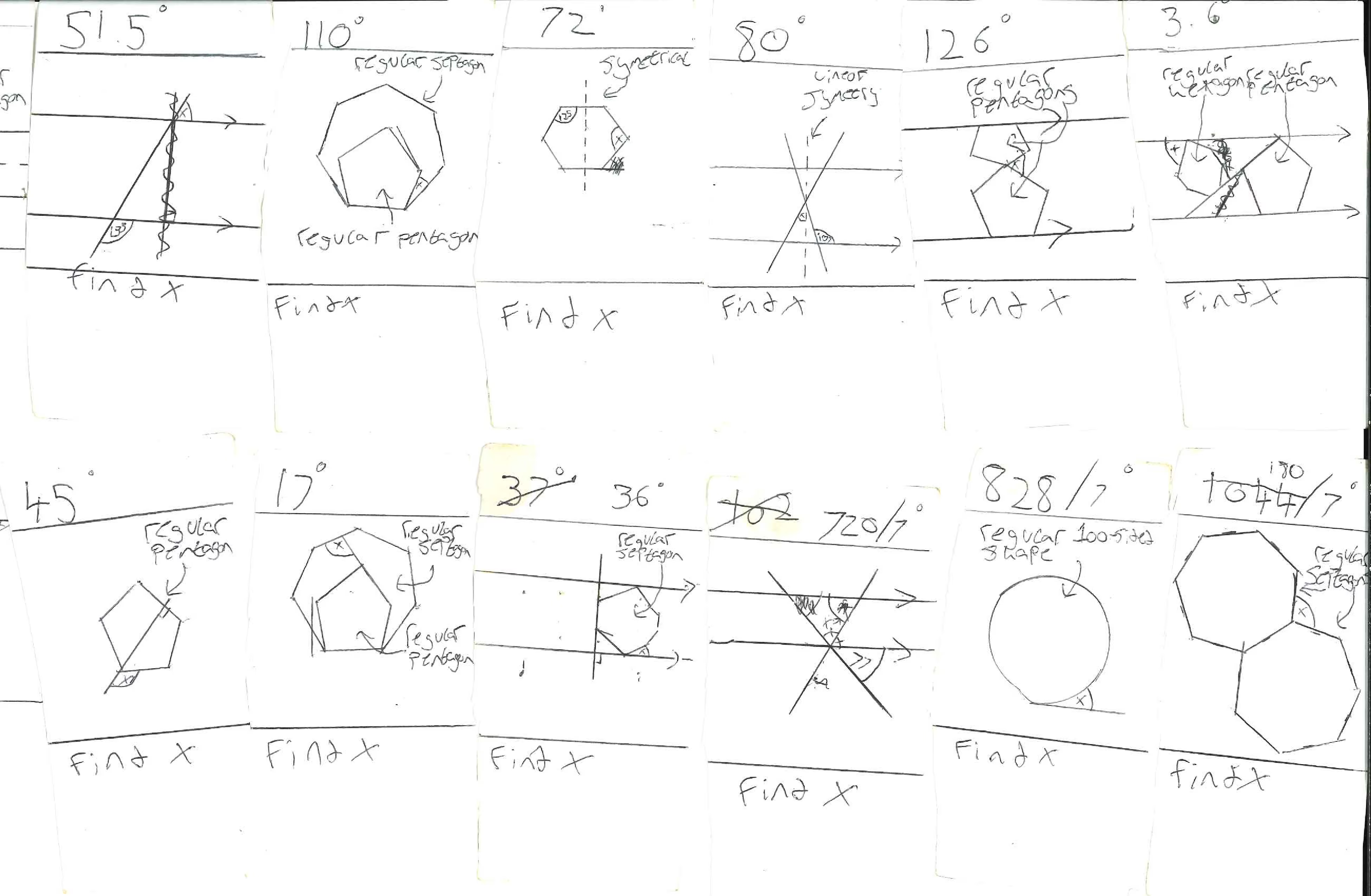
The next section was found on irregularly shaped cards, scanned together in one page for convenience, and may be working for geometry problems, purely by author A.
In contrast to almost all other papers, the back of this section is very low in information density, containing only the repeated text ████ █████ on all cards.
The geometric questions on the informational sides are on a few topics: polygons and simple constructions of parallel lines. The motive for these is unknown.
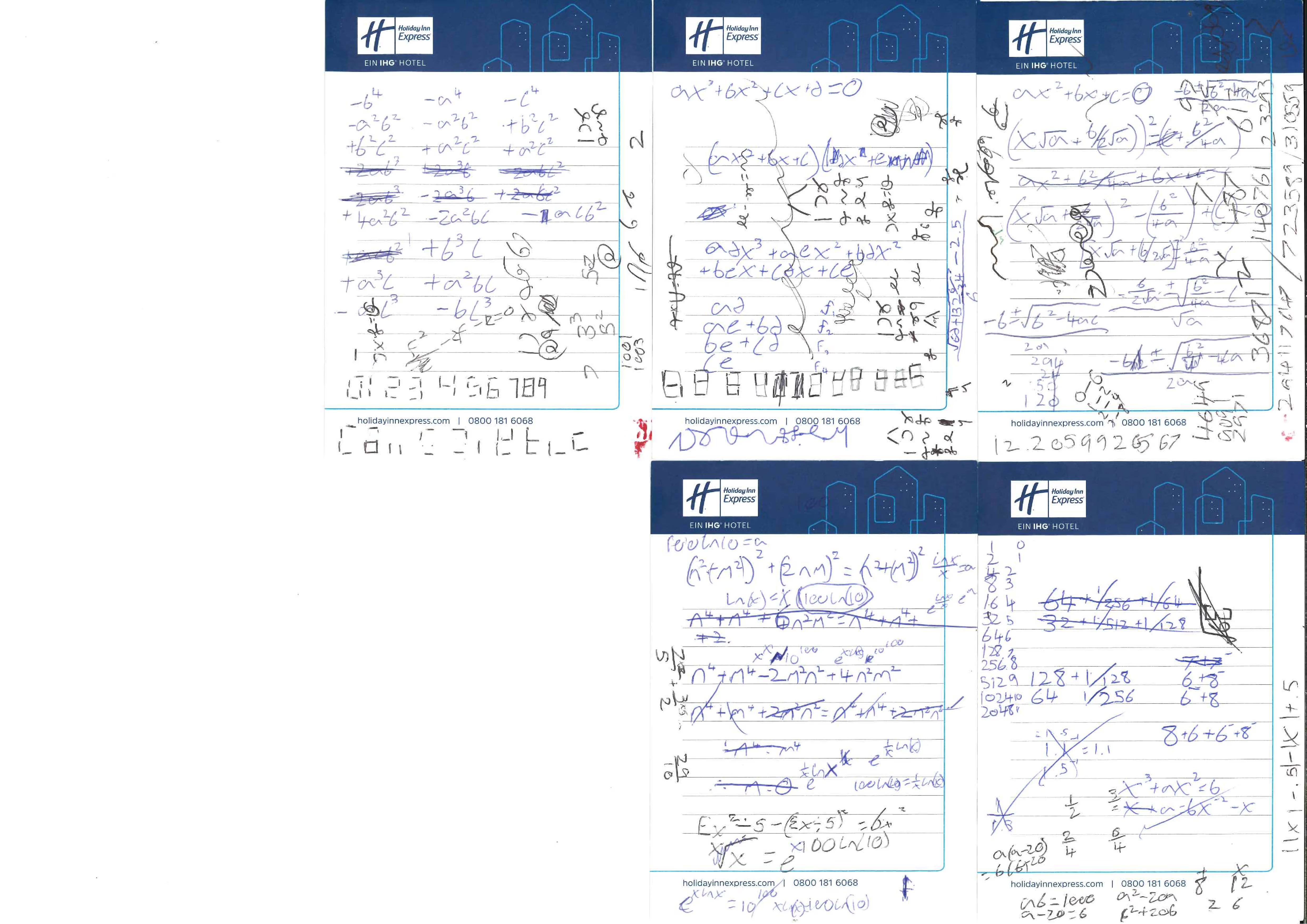
Finally, the remaining section is found written on "Holiday Inn" cards labelled partly in German, also entirely by Author A, indicating that they have access to international travel. The greater reach this implies is extremely worrying and is to be considered a Class-4 research priority.
This face of the cards is primarily devoted to unknown working involving polynomials and in one case a recurrence relation, although a chemical formula - determined to be for the food additive "monosodium glutamate" - is also written. The potential significance of this is unknown.
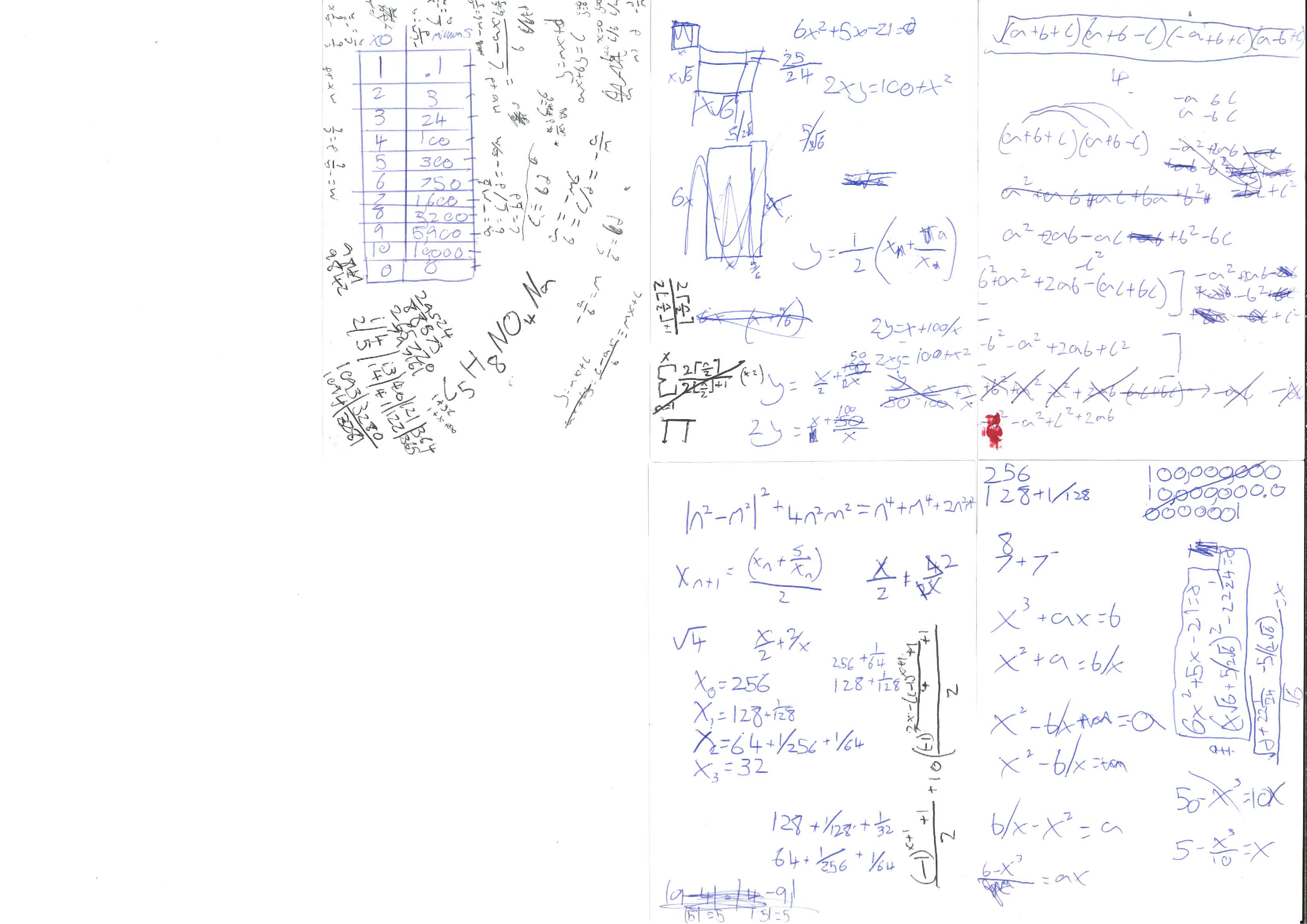
The content of this face generally relates to the other side (it is primarily polynomials and a few instances of arithmetic), with the exception of an apparent attempt to approximate Latin lettering with a drawing of a 7-segment display.